

Professional Packaging Equipment Supplier
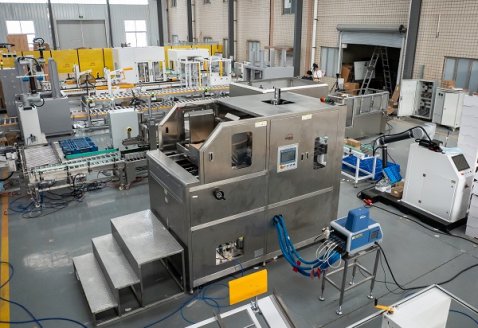
The stainless steel hot melt glue carton folding machine is a specially customized carton folding machine. The entire machine is made of 304 stainless steel, which is aesthetically pleasing, clean, and corrosion-resistant, making it suitable for use in clean workshops for food, pharmaceuticals, and other industries. It is equipped with a Nordson hot melt glue machine imported from the United States, offering fast glue spraying speed, stable quality, and guaranteed after-sales service.
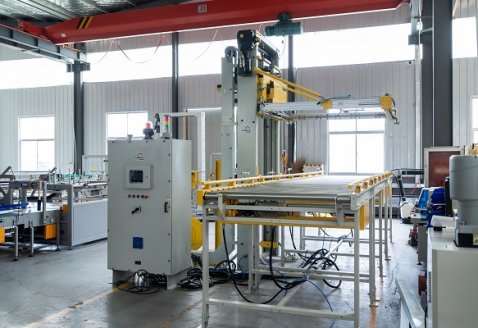
The horizontal explosion-proof strapping machine is a custom-designed non-standard packaging equipment. It adopts explosion-proof motors, explosion-proof electrical cabinets, explosion-proof sensors, and explosion-proof wiring to achieve a complete explosion-proof system for the entire machine. The explosion-proof rating can be customized according to user requirements. A conveyor can be installed at the bottom to enable fully automatic inline operation, and goods can also be placed directly on the ground for strapping.
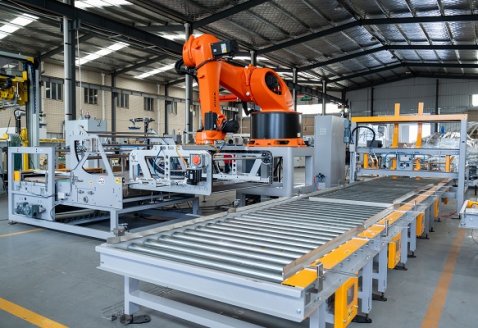
Robot layer-by-layer palletizing is the highest-speed model among robotic palletizing products. Through the upstream automatic collating equipment, the machine arranges the cartons into the required pattern in advance. Then, by means of a heavy-duty robot, an entire layer of products is directly picked up onto the pallet in one go, achieving full-layer palletizing by the robot.
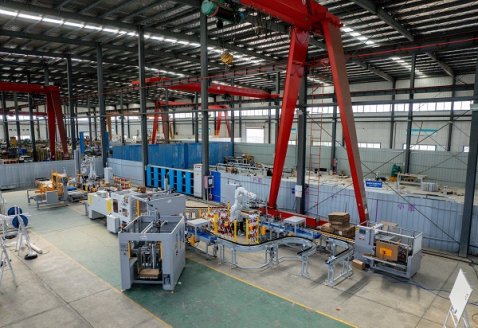
The disinfectant case packing and palletizing line is a very typical automated packaging project. The project consists of eight main parts: a carton erector, a carton folding machine, a case packer, a heat shrink machine, a carton sealer, a palletizer, a fully automatic wrapping machine, and conveyors. It is suitable for various carton types and bottle types, with fast palletizing speed and excellent wrapping results. It is widely used in case packing, palletizing, inline wrapping, and other fields for various bottled products.
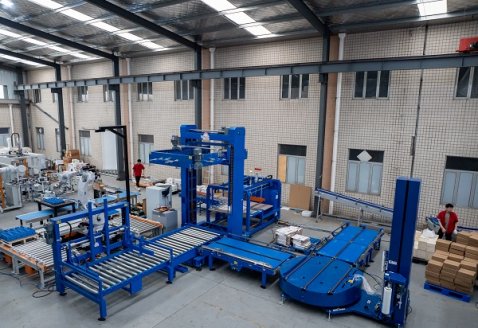
This packaging line is mainly designed for palletizing red wine cartons. It mainly consists of an automatic pallet dispenser, a low-level palletizer, an inline wrapping machine, and pallet conveyors. In view of the tall and narrow carton shape of red wine cartons, Aixun has specifically adopted a more stable carton pushing mechanism when manufacturing the collating mechanism, fully ensuring the stability of the cartons during collation.
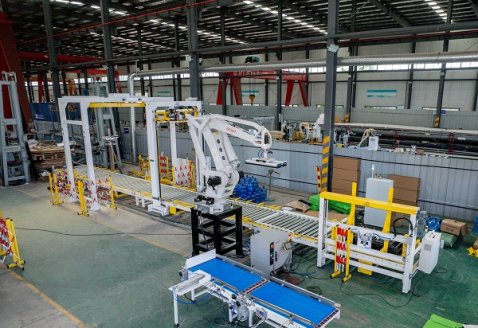
This line is a heavy-duty palletizing, strapping, and wrapping packaging line specially designed for military ammunition products. It is intended to achieve automated packaging processes such as palletizing, pallet strapping, and inline wrapping for ammunition and other military products, so as to provide waterproofing, moisture protection, and convenient transportation.
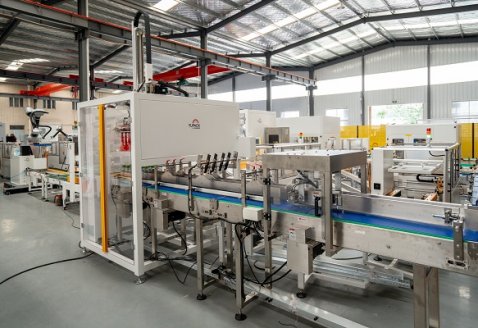
Bottled Water Case Packing Line is a widely used automated packaging line. It is widely applied in production sites for various bottled products. The machine mainly consists of an automatic carton erector, a translational case packer, an automatic carton sealer, a labeling machine (optional), powered roller conveyors, and a collaborative robot palletizer.
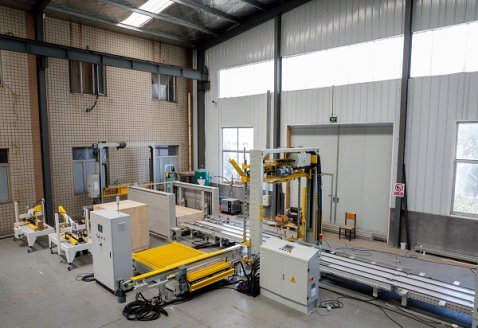
This insulation board strapping and packaging line mainly achieves automatic sleeper placement, automatic corner protection, and automatic strapping for insulation board products. The biggest feature of this machine is that it uses sleepers instead of pallets, which enables cross strapping and reduces production costs. At the same time, the machine automatically places small corner protectors, which not only protects the insulation boards but also reduces the cost of corner protectors. It offers high packaging efficiency and excellent strapping results.
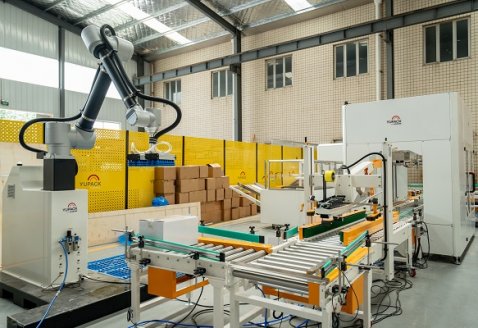
This line is an automated packaging line designed for the cartoning and palletizing of liquid and paste butter. It mainly consists of an automatic carton erector, a carton bag inserter, a bag lifting and sealing machine, an automatic carton sealer, and a palletizing robot.